

Museum Hours
March - November
Monday–Saturday: 9:30 AM – 5:00 PM
Sunday: Closed
Holiday Hours
Memorial Day: 10:00 AM – 4:00 PM
Labor Day: 10:00 AM – 4:00 PM
July 4th: Closed

What You Will See
The Alpine Hills Museum preserves and displays objects that illustrate the social, religious, industrial, and educational history of Sugarcreek.
Exhibits and collections include:
Swiss and Amish cultural heritage
Artifacts dating back to the 1700s
An 1890s Amish kitchen
An 1890s cheesehouse
Books, pamphlets, papers, maps, genealogies, photographs, manuscripts, letters, journals, and records
Thoughtfully designed exhibits and audio-visual displays make history easy to understand and engaging for visitors of all ages.
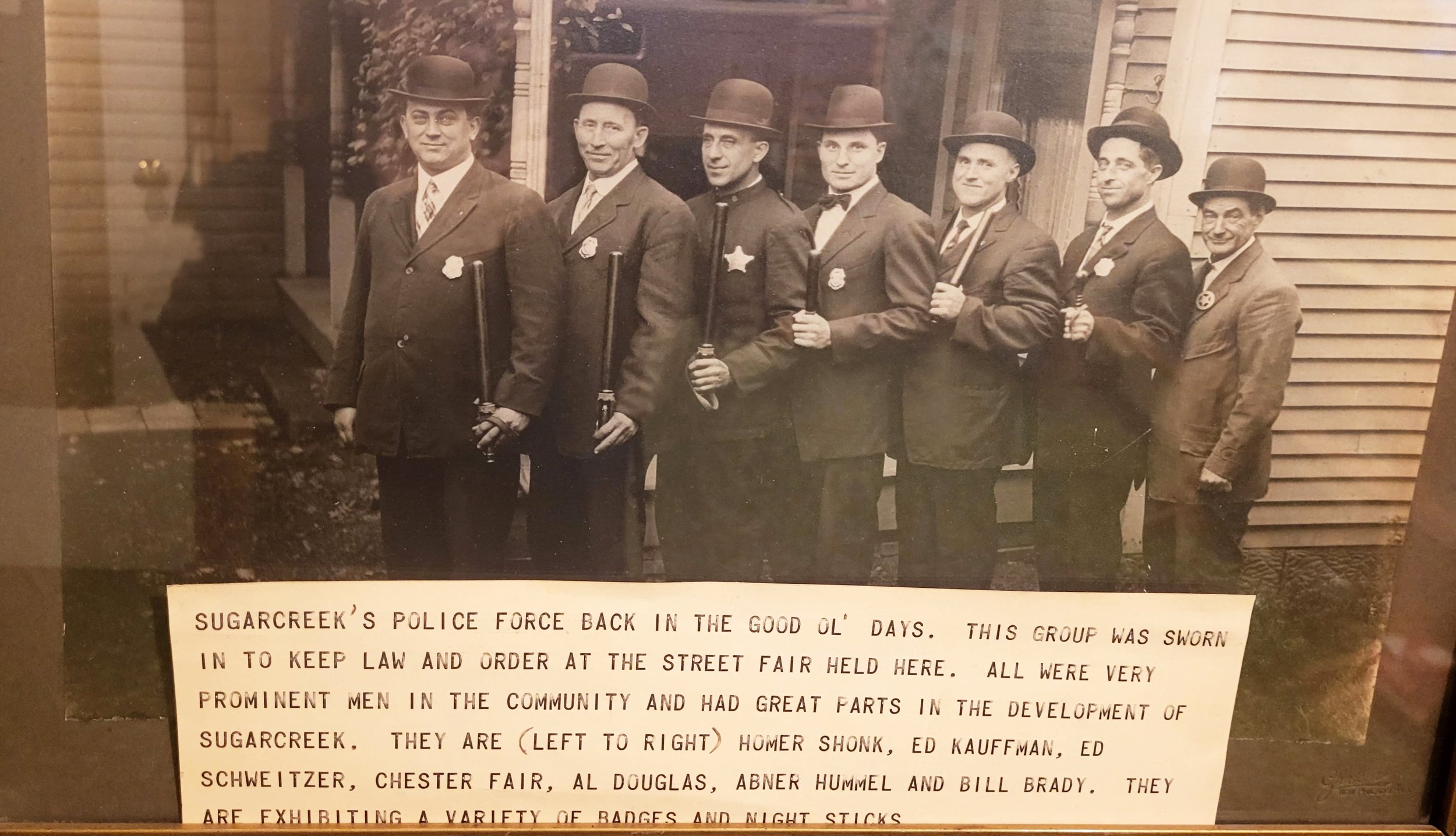
The early members of Sugarcreek’s Police Force
Our Story
The Alpine Hills Historical Society was organized in July of 1976 to create a museum dedicated to collecting and displaying artifacts significant to Sugarcreek. The museum’s first home was a two-story house owned by the Ohio Swiss Festival, but the space quickly became too small for the growing collection.
In 1977, Ranson Andreas generously donated his downtown Sugarcreek building to the Historical Society, providing an ideal permanent home for the museum. This move also allowed the Ohio Swiss Festival to relocate its information center to the front portion of the new museum location.
During the museum’s first year downtown, only a few display cases occupied the first floor. By the second year, two major exhibits were added: a nineteenth-century Amish kitchen and a 1890s cheesehouse. Over time, additional exhibits and audio-visual displays followed.
Today, the Alpine Hills Museum continues to grow, welcoming visitors from across the country and around the world. A visit offers a nostalgic and engaging experience, bringing the history of Sugarcreek to life through interactive exhibits and carefully preserved artifacts.

The Alphorn
Stories From the Past
Like the alphorn bridging Alpine valleys with its sustained call, these stories carry voices across time—details that resonate with the textures of lived experience, drawing you into the daily realities of earlier generations. A postcard mentioning a broken shaft and torn harness speaks volumes when you can stand near the actual buggy, trace the leather's grain, and understand the weight of what "lucky" meant for Katie Ann in 1948. Standing in front of a wood-burning stove makes a 1919 lime jello meatloaf recipe less peculiar; you begin imagining four hours of ash-sifting just to make dinner possible. Each essay offers a glimpse—Dr. Yoder's eight bullet wounds, bilingual hymns, a bootlegger's fine—into the ongoing work of uncovering and preserving this region's past. The museum's curated displays continue that work, where context and proximity transform historical curiosity into something closer to understanding.
All photography provided by Jordan Morehart